Gas composition
Confirm that the sample is suitable for compression measurement and identify condensable vapours, reactive gases or contamination.

Mechanical Vacuum Measurement
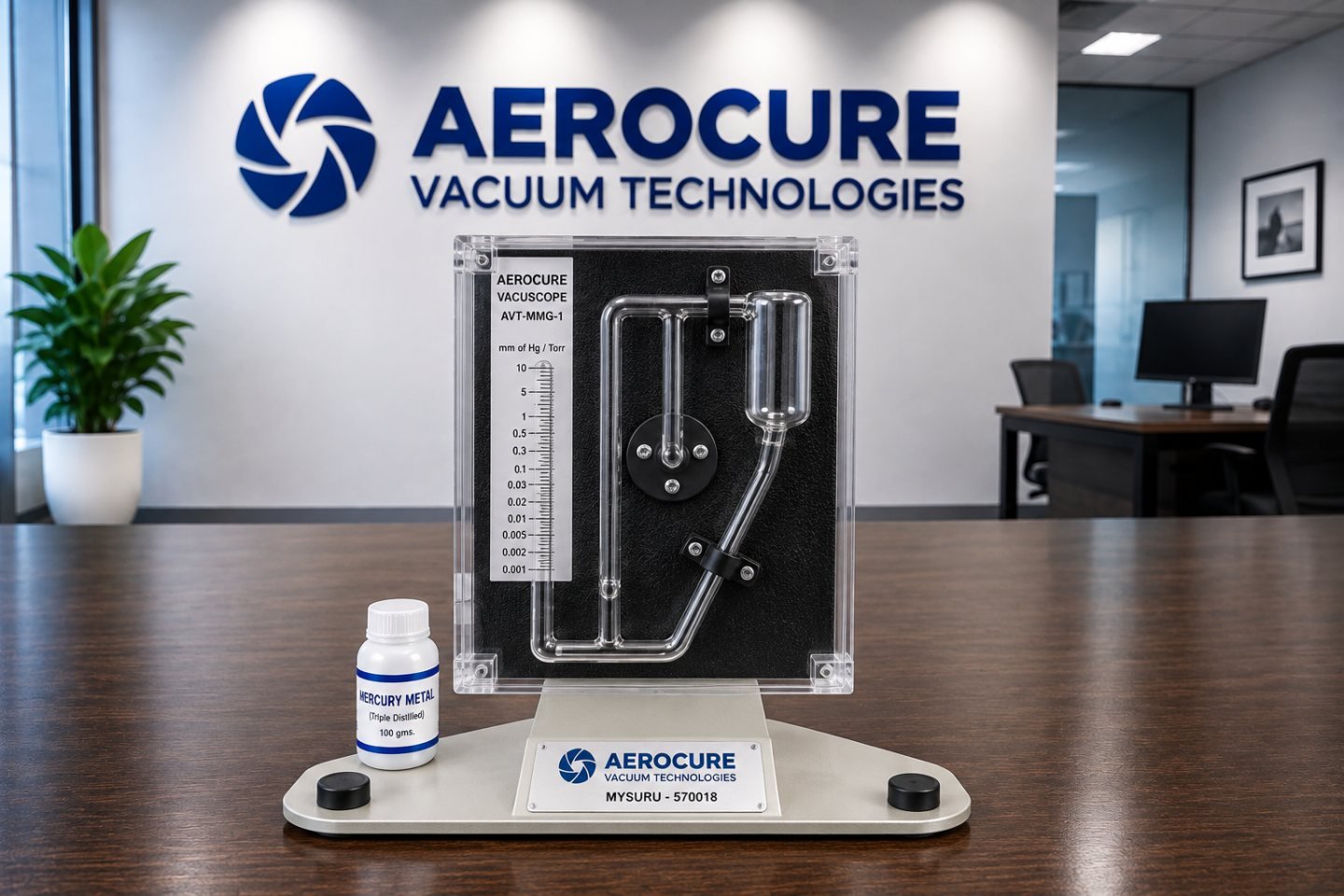
A McLeod gauge measures low gas pressure by compressing a known sample, but its mercury and process limitations require careful review before use.
PRODUCT OVERVIEW
A McLeod gauge traps a known gas volume and compresses it using a mercury column. The resulting volume and pressure relationship allows the original pressure to be determined from the calibrated scale. It is a mechanical, intermittent measurement rather than a continuous electronic process signal.
The method can be useful as a reference principle for suitable permanent gases, but it is not appropriate for every process. Vapours that condense during compression can give an incorrect result, while mercury toxicity, glass fragility, orientation and operating procedure create important safety and practical constraints.
TECHNICAL SELECTION
Final suitability depends on the application and the selected product's approved technical documentation.
Confirm that the sample is suitable for compression measurement and identify condensable vapours, reactive gases or contamination.
Match the expected pressure to the calibrated range and resolution of the specific instrument.
Review legal restrictions, operator training, containment, spill response, storage and end-of-life disposal before use.
Provide stable orientation, protected glassware, a suitable connection and an operating procedure that prevents unsafe handling.
APPLICATION FIT
These examples guide the initial discussion; technical fit is confirmed from the actual process and operating conditions.
TECHNICAL NOTE
McLeod gauges contain mercury and glass and require trained handling, containment, spill planning and compliant disposal. They can read incorrectly when condensable vapours are present because the vapour may condense during compression. Confirm current legal and site restrictions before selection, transport or use.
BUYER QUESTIONS
Traditional McLeod gauges use mercury as the compression and indicating liquid. That creates toxicity, spill, transport and disposal obligations that must be addressed before the instrument is accepted for use.
It is generally unsuitable because vapour can condense as the sample is compressed, producing a misleading reading. The actual gas composition must be reviewed before using the method.
No. It is a manually operated, intermittent measurement. A compatible electronic gauge is normally considered when continuous indication, remote output or automatic control is required.
APPLICATION REVIEW
Share the operating range, process media, duty, connection and control requirements available to you. Aerocure will review the request before confirming a suitable next step.
TECHNICAL ENQUIRY
Share the equipment identity, operating conditions, connection details and required result. Include what is known so the next step can be reviewed.
Call +91 74119 78886