QUICK ANSWER
What to Know First
Define whether the valve must isolate, vent, bypass, dose or regulate. Then review pressure difference and direction, gas and temperature, seal/material compatibility, conductance, flange, actuation, position feedback and failure behaviour against the exact valve documentation.
OVERVIEW
The Technical Context
The valve forms part of the pumping and control sequence. A suitable valve must work with the pressure conditions, adjacent equipment and expected operating changes, as well as fitting the available port.
Distinguish a closed valve's sealing capability from the conditions under which it may open or move. A valve can tolerate a stated pressure difference while closed yet require pressure equalisation before opening.
- Assign a clear valve function.
- Describe pressure on both sides and its direction.
- Separate isolation from active pressure regulation.
- Review controls, service access and the operating sequence.
ENGINEERING GUIDANCE
Start with the Required Function
| Function | What the valve does | Questions to settle |
|---|---|---|
| Isolation | Separates a chamber, line or pump. | Which pressure direction, leak-tightness and opening conditions apply? |
| Venting or dosing | Introduces gas into a defined volume. | What gas, flow behaviour and controlled sequence are needed? |
| Bypass or roughing | Provides another flow path. | How is the path interlocked with pumps and other valves? |
| Throttling or regulation | Changes conductance to support control. | Is the exact valve designed for modulating service and compatible feedback? |
ENGINEERING GUIDANCE
Check Differential Pressure and Opening Conditions
Record normal and exceptional pressure on each side, whether the direction reverses, and the maximum difference at an operating change. Review both the closed sealing limit and the opening or actuation limit in the manufacturer documentation.
An equalisation or bypass step may be needed before a valve opens. Confirm this within the approved system sequence; do not infer it from the flange size or a generic valve-family description.
ENGINEERING GUIDANCE
Consider Conductance and Geometry
Conductance describes how readily gas passes through the flow path. The valve opening, adjacent pipework and pressure regime can restrict the effective pumping arrangement. A full passage, short body or larger connection can be useful, but the complete system should be reviewed.
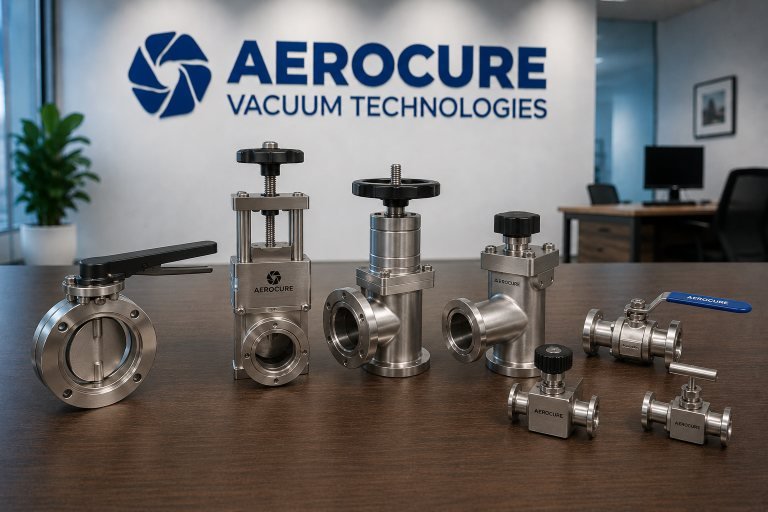
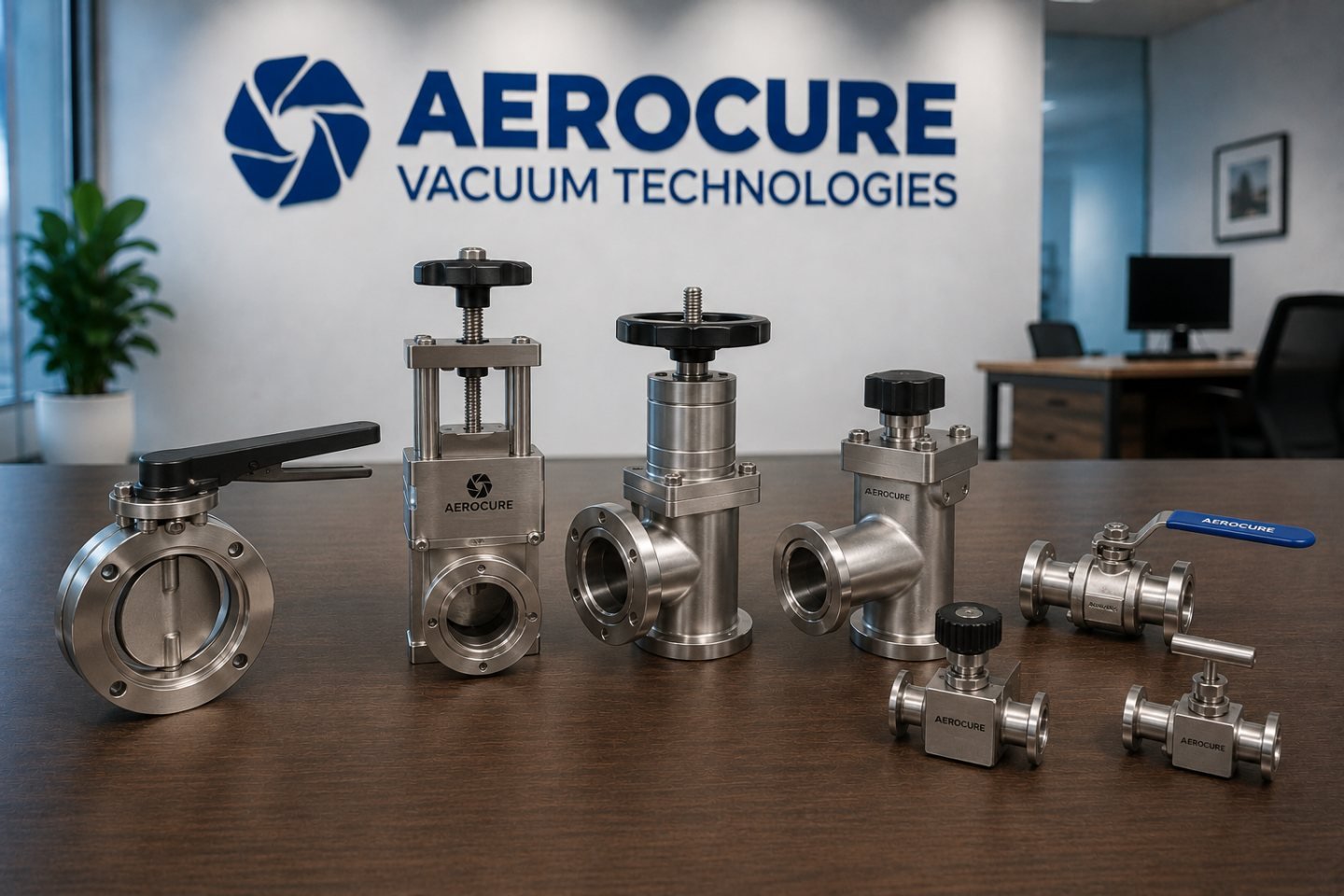
A butterfly plate remains in the passage, while an open gate design can provide a clear passage. These observations explain different layouts; they do not establish a universal pumping-speed improvement or make either type suitable for every task.
ENGINEERING GUIDANCE
Match Materials and Seals to Exposure
- Identify gases, vapours, cleaning agents, particles and condensable material.
- Record process, ambient and any bakeout temperatures.
- Review wetted body materials, seal materials and permeation/outgassing constraints.
- Check trapped volumes, dead spaces and contamination-sensitive parts.
- Confirm permitted cleaning, service kits and replacement parts for the exact item.
ENGINEERING GUIDANCE
Specify Actuation, Feedback and Failure Behaviour
Manual, pneumatic and electrical actuation create different utility and control needs. State available supply, expected cycle frequency, switching or modulating duty, position indication and the sequence after a loss of power or air.
Decide which safety interlocks are required and who owns that decision. A limit switch or controller signal should not be assumed to prove a safe process state without reviewing the complete system.
ENGINEERING GUIDANCE
Review Integration and Maintenance Access
Provide flange standard and nominal size, orientation, envelope, mounting/support and access for operating or servicing the valve. Include the weight and loads imposed by neighbouring equipment; a detachable connection is not automatically a structural support.
Request an exact datasheet, approved drawing, seal details, actuator requirements and installation instructions before final selection. The proposal should identify the agreed configuration rather than a loosely defined substitute.
PRACTICAL WORKSHEET
Vacuum Valve Enquiry Checklist
Share the conditions on both sides so the valve can be reviewed as part of the system.
Function and pressure
- Isolation, venting, bypass, dosing or regulation
- Normal/maximum pressure on both sides
- Differential direction and opening sequence
Process
- Gas, vapour and contamination
- Temperature and any bakeout
- Seal and material requirements
Mechanical integration
- Flange family, nominal size and drawing
- Available envelope and orientation
- Pipe loads, support and service access
Controls
- Manual, pneumatic or electric actuation
- Supply, feedback and cycle duty
- Interlocks and required fail behaviour
PRIMARY REFERENCES
Technical Sources and Further Reading
These references support the general technical explanation. Always use the current instructions and approved procedure for the exact equipment and task.